Complete Rick Simpson Oil Dosage Guide: 2025 90-Day Protocol Chart
Step-by-step RSO dosing guide for first-time users: rice-grain starting dose, 4-phase protocol, titration schedule, exact weekly increases, and safety tips for the complete 90-day treatment.
Starting RSO is daunting—this guide removes all guesswork. Start low, go slow, and reach your therapeutic dose safely.
Important: Educational Purposes Only
This guide is for educational purposes only. RSO (Rick Simpson Oil) is extremely potent. Always consult a qualified healthcare professional before starting, especially if you are pregnant, nursing, taking medications, or managing a medical condition. Start low, go slow.
RSO Dosage at a Glance
½ rice grain
Night only
1 grain
2–3× daily
2 grains
3–4× daily
1g per day
Days 61–90
What Is RSO? Quick Overview
Rick Simpson Oil (RSO) is a full-spectrum cannabis extract known for its exceptionally high THC content (60–95%+) and rich cannabinoid profile including CBD, CBG, CBN, and over 200 aromatic terpenes. Created by Rick Simpson in 2003, RSO has become one of the most potent cannabis medicines available.
Because of its extreme potency, precise dosing and gradual dose increases are absolutely critical. Taking too much too fast leads to overwhelming psychoactive effects. The 90-day protocol exists because it works—it allows your body to build tolerance slowly while achieving therapeutic effects safely.
General Principles
Start with a very small dose
Begin with a rice grain size or less
Increase slowly to avoid side effects
Take time between dose increases
Split doses throughout the day
Multiple smaller doses work better than one large dose
Consistency matters more than speed
Regular dosing produces better results
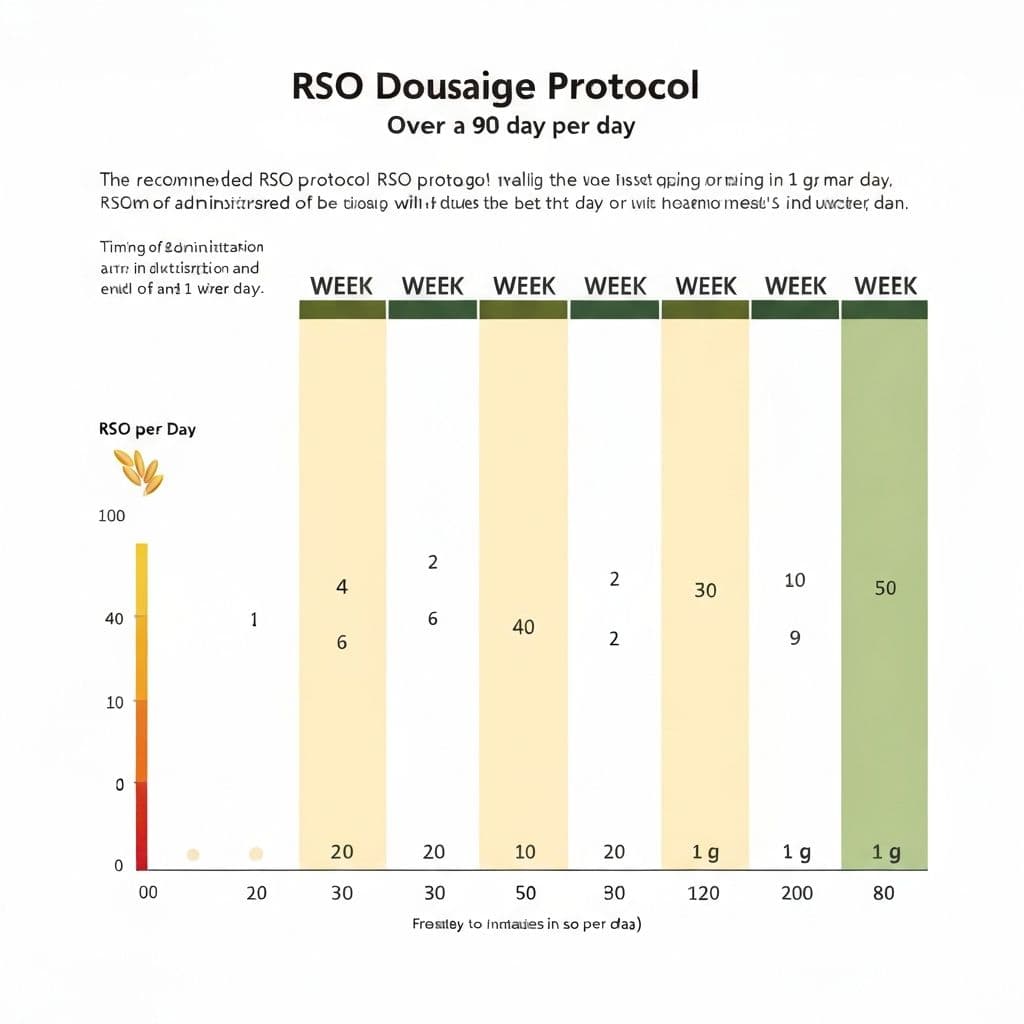
Official 2025 Rick Simpson Oil Dosage Chart
| Weeks | Daily Dose | Total per Week | Notes |
|---|---|---|---|
| 1–2 | Rice-grain (≈ 0.1g split 3×/day) | 0.7–1.4 grams | Start low, go slow |
| 3–4 | Pea-size (≈ 0.25g split 3×/day) | 1.75–3.5 grams | Increase only if comfortable |
| 5–12 | 1 gram per day (split or night dose) | 7 grams | Maintenance phase - full dose |
Complete 90-Day Treatment: 60 Grams Total
The full Rick Simpson protocol requires 60 grams of RSO over 90 days. This breaks down as follows:
- • Weeks 1-2: Approximately 1-1.4g total (building tolerance)
- • Weeks 3-4: Approximately 3.5-7g total (gradual increase)
- • Weeks 5-12: 7 grams per week × 8 weeks = 56 grams
- • Total: ~60 grams for complete protocol
Our full treatment package provides all 60 grams you need at the best value pricing. Individual results vary - some may complete their protocol in 60-90 days, while others may extend treatment based on their condition and response.
Important Safety Note
Never exceed recommended doses. If you experience discomfort, reduce your dose and slow down the titration. Everyone's tolerance is different. Listen to your body.
How to Measure
Rice Grain Sizes:
- • Rice grain size ≈ very small starting dose
- • Half grain ≈ mid-step
- • Full grain ≈ standard reference
Application Methods:
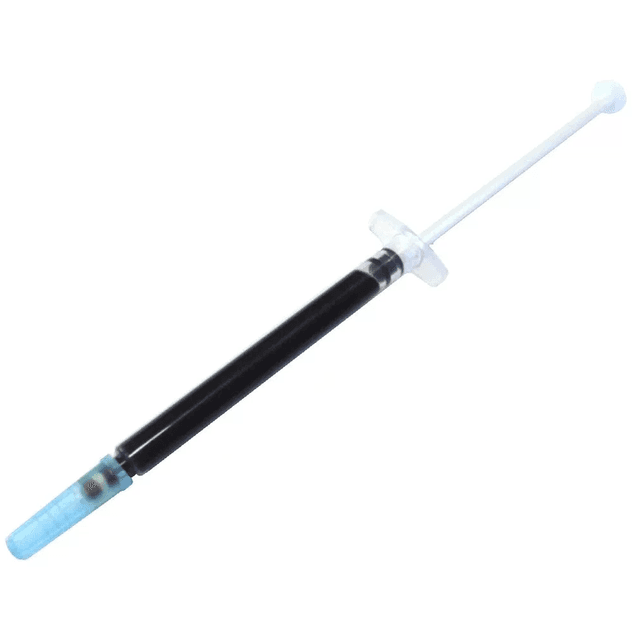
Use a syringe for accuracy. You may place RSO:
- • Under the tongue
- • On food (bread, fruit, yogurt)
- • Inside an empty capsule
90-Day RSO Dosage Schedule
Phase 1: Introduction & Tolerance Building (Days 1–30)
Goal: Allow the body to adjust
Days 1–5
Dose: ¼ grain of rice
Frequency: Once daily (night)
Days 6–10
Dose: ¼ grain
Frequency: Twice daily (morning & night)
Days 11–15
Dose: ½ grain
Frequency: Twice daily
Days 16–20
Dose: ½ grain
Frequency: Three times daily
Days 21–30
Dose: 1 full grain
Frequency: Three times daily
⚠️ If side effects occur (dizziness, anxiety, nausea), reduce to the previous comfortable dose for several days.
Phase 2: Therapeutic Range (Days 31–60)
Goal: Reach and maintain effective dosing
Days 31–40
Dose: 1 grain
Frequency: 3–4 times daily
Days 41–50
Dose: 1½ grains
Frequency: 3–4 times daily
Days 51–60
Dose: 2 grains
Frequency: 3–4 times daily
Focus on:
- • Hydration
- • Light meals
- • Adequate sleep
Phase 3: Full Protocol / Maintenance (Days 61–90)
Goal: Sustain full therapeutic intake
Days 61–90
Dose: Up to 1 gram per day total
Frequency: Divided into 3–5 doses
Many users reach approximately 60 grams total over 90 days, but this varies by tolerance and individual response.
Tips for Best Results
Avoid alcohol and other intoxicants
Do not drive or operate machinery
Store RSO in a cool, dark place
Keep out of reach of children
Possible Side Effects
These usually lessen as tolerance builds:
• Drowsiness
• Dry mouth
• Dizziness
• Increased appetite
When to Stop or Adjust
Stop or lower your dose if you experience:
- • Persistent anxiety or panic
- • Severe nausea or vomiting
- • Confusion or extreme sedation
Seek medical advice immediately if symptoms are severe.
Final Note
Everyone responds differently to RSO. This 90-day guide emphasizes patience, consistency, and safety. The best results come from listening to your body and progressing at a comfortable pace.
Golden Rules:
- ✓ Start very small
- ✓ Increase slowly
- ✓ Split doses during the day
- ✓ If it feels too strong, lower the dose
How Much Is One Dose?
Use the size of a grain of rice as your reference:
- • ¼ grain = very tiny (starter dose)
- • ½ grain = small
- • 1 grain = standard
You can place RSO:
- • Under the tongue
- • On food (bread, fruit, yogurt)
- • Inside an empty capsule
90-Day RSO Schedule (Easy Version)
Step 1: Start Very Small (Days 1–10)
Goal: Let your body adjust
- • Dose: ¼ grain of rice
- • Time: Once at night
If you feel okay after a few days, you may take: ¼ grain in the morning + ¼ grain at night
Step 2: Slow Increase (Days 11–30)
Goal: Build tolerance without discomfort
- • Dose: ½ grain
- • Times per day: 2–3 times
Stay at this level if it feels strong. There is no rush.
Step 3: Medium Dose (Days 31–60)
Goal: Reach a helpful daily amount
- • Dose: 1 grain
- • Times per day: 3 times
Most beginners feel effects clearly at this stage.
Step 4: Full Daily Use (Days 61–90)
Goal: Maintain a steady routine
- • Total per day: Up to 1 gram total
- • Split into: 3–5 small doses
Not everyone needs the full amount. Use what feels right for your body.
Final Advice for First-Time Users
Slow progress = better experience.
Taking less RSO more consistently works better than taking too much at once.
Listen to your body.
Go at your own pace.
Best RSO Products for the 90-Day Protocol
60g RSO Full Treatment Package
Complete 90-day protocol package. Includes 60 grams of premium RSO with batch-matched lab results and dosing guide.
FREE BONUS: Get 1 month of RSO oil absolutely FREE with every 90-day treatment package! Treatment duration may vary based on individual condition and response.